Indigo has a reputation for being forgiving. You can run a vat in a bucket, work at room temperature, and pull out a respectable blue without much ceremony. That reputation was earned on cotton, linen and hemp — cellulose fibres that shrug off an alkaline bath. Wool is a different animal, quite literally. Put an untreated skein into a vat built for cotton and you may take out something that is no longer the shape or texture you put in. The chemistry is not against you, but it does ask for a gentler hand.
Wool and indigo are not a bad match. Some of the finest historic blues — the deep woad-dyed cloth of northern Europe — were made on wool. The vat just needs adjusting: less alkali, less heat, less time, and more patience.
Cotton is cellulose: long chains of glucose units, chemically tough, comfortable in a strongly alkaline bath. Wool is keratin, a protein built from amino acids and held together partly by disulphide bonds between cysteine residues. Those bonds give wool its elasticity and bounce, and they are vulnerable.
Protein fibres are also amphoteric, carrying both acid and basic groups along the chain. Around pH 4.5 to 5 — wool's isoelectric point — the fibre is at its most stable and least reactive. Raise the pH and the fibre takes on a negative charge, the surface scales lift, and the alkali begins attacking the peptide bonds. Push it far enough and the damage is permanent: wool turns harsh, dull and weak.
Indigo, unfortunately, needs alkali. The pigment is insoluble as it comes; to dye with it you must reduce it to leuco-indigo, a soluble yellowish form, and that step requires both a reducing agent and a pH high enough to keep the reduced form stable. The trick with wool is to give the vat just enough alkali to work, and no more.
These get muddled together, but they are separate problems with separate causes.
If you are unsure whether a vat is too aggressive, test one small skein before committing a project. A spare sample of the same yarn tells you more than any general rule.
Choose a recipe built on soda ash (sodium carbonate) rather than caustic soda (sodium hydroxide). Caustic soda will reduce indigo very effectively, and it will also chew through wool. Soda ash is milder and easier to control, and a fructose or fruit-sugar vat kept with soda ash is a sensible starting point for animal fibres. Many dyers aim for roughly pH 9.5 to 10.5 on wool, rather than the 11-plus that cotton tolerates happily.
Check with pH papers or a meter rather than guessing, and add alkali gradually — it is far easier to raise the pH than to bring it down without wrecking the vat. If you overshoot on the low side, indigo will not reduce properly: you will see blue specks, a stubborn bronzy scum, and pale, rub-off prone results.
Cotton vats often run at 50°C and above. Wool does not. Aim for around 30–40°C, and treat 50°C as a ceiling you do not need to reach. Warmth speeds up both dye penetration and alkaline damage, so the gentler end of the range is almost always the better trade.
Just as important as the vat temperature is the water you rinse in afterwards. Keep every bath within a few degrees of the last one. A hot skein plunged into cold water undergoes thermal shock, and combined with handling, that is a reliable route to a felted, shrunken result.
Do not leave wool sitting in the vat while you attend to something else. Every extra minute is alkalinity working on the fibre.
Superwash wool has been treated so its scales cannot interlock. It is much harder to felt, but it behaves differently in the vat: colour often strikes faster and can look slightly flatter. Worsted-spun yarn with a firm twist resists felting better than a loose woollen singles. Alpaca, mohair and cashmere are all proteins and need the same care. Silk tolerates marginally more alkali but still dulls under strong conditions.
Wool needs to be clean before it goes near the vat — lanolin and spinning oils block dye — but scour it kindly. Use a wool-safe detergent at around 40°C or below, with minimal handling. No boiling, no soda ash in the wash bath. Hot water plus movement is exactly how you make felt.
Rinse in water matched to the vat temperature, then cool down in stages rather than all at once. Finish with a mild acidic rinse — a tablespoon of white vinegar in a couple of litres of cool water will neutralise residual alkali in the fibre. Press the water out, shape the skein or cloth, and dry it flat away from direct heat.
Indigo sits inside the fibre as trapped pigment rather than bonding to it chemically, so expect a little rub-off on very dark shades. A final gentle soap rinse helps, and the colour will settle with use and washing.
Scour at 40°C, pre-wet, then dye in a soda-ash vat held at 35–40°C and pH 9.5–10.5. Dip for ten minutes, oxidise for twenty, and repeat three times. Rinse through gradually cooling baths, neutralise with vinegar, and dry flat. Keep notes on pH, temperature and dip count — with wool, small variations make a visible difference, and the only way to repeat a good result is to know how you got it.
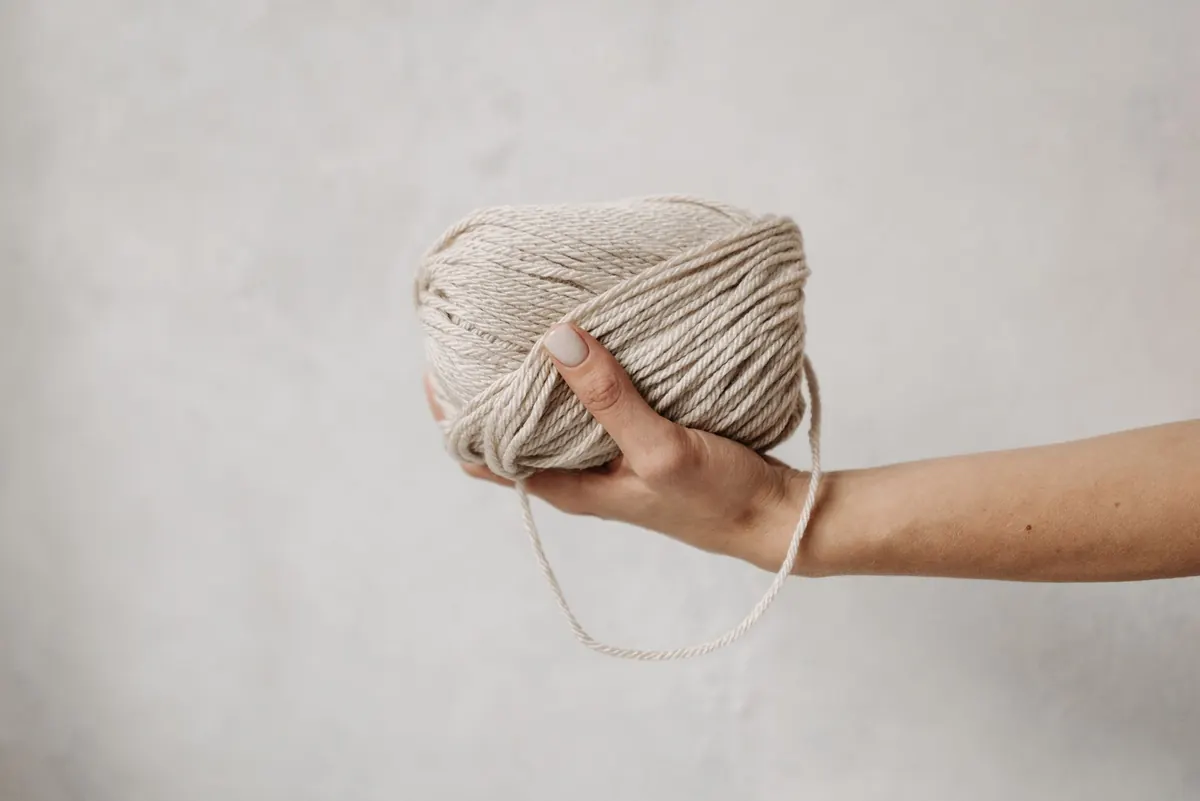
Photo: Pavel Danilyuk / Pexels